PPROACTIVERISK Video Library
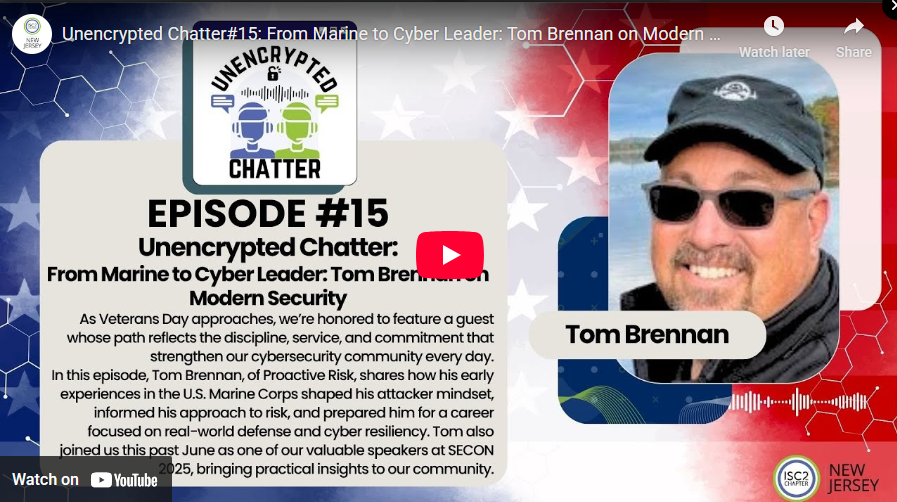
Unencrypted Chatter#15: From Marine to Cyber Leader: Tom Brennan on Modern Security
In this episode, Tom Brennan shares how his early experiences in the U.S. Marine Corps shaped his attacker mindset, informed his approach to risk, and prepared him for a career focused on real-world defense and cyber resiliency. Tom also joined us this past June as one of our valuable speakers at SECON 2025, bringing practical insights to our community.
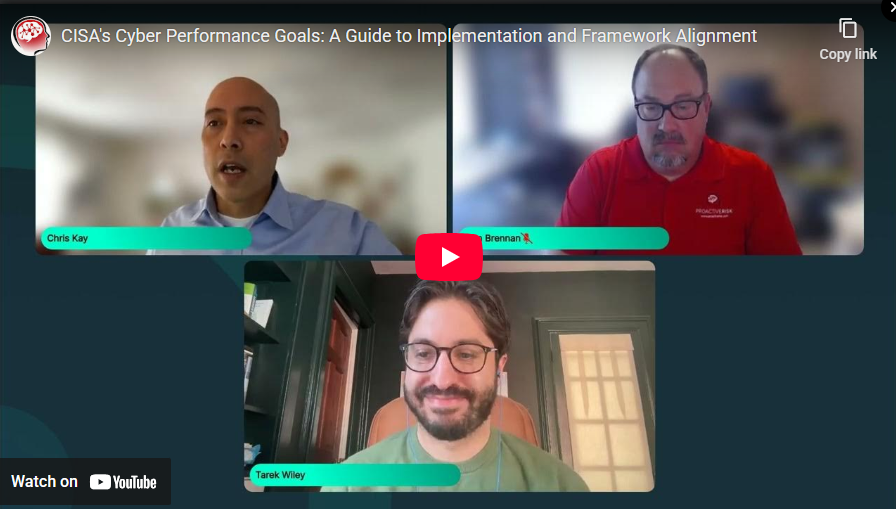
CISA's Cyber Performance Goals: A Guide to Implementation and Framework Alignment
he Cybersecurity and Infrastructure Security Agency's (CISA) Cyber Performance Goals (CPGs) are a set of protections aimed at reducing risk to businesses, critical infrastructure, and U.S. citizens. Join us for a webinar deep dive into the CPG assessment process, highlighting its key elements and explaining why it’s vital for effective cybersecurity.
Jumpstarting A Cyber Security Program with CIS
CIS Controls v8 is a prioritized set of actions to protect your organization and data from known cyber-attack vectors. It is a set of cybersecurity standards from the Center for Internet Security. The CIS Controls are a recommended set of prioritized cyber defense best practices. The CIS V8 controls are “mapped to and referenced by multiple legal, regulatory, and policy frameworks".
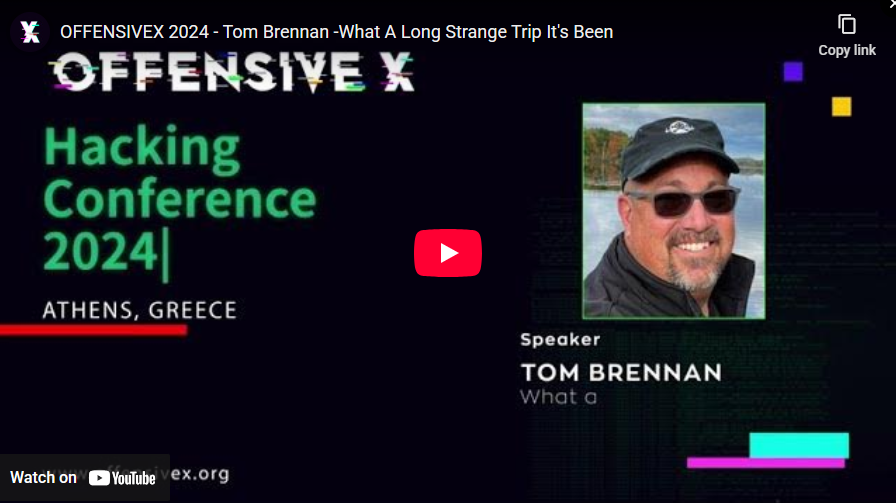
OFFENSIVEX 2024 - Tom Brennan -What A Long Strange Trip It's Been
AI Red Teaming LLM: Past, Present, and Future
Explore the world of AI Red Teaming Large Language Models (LLMs) - their origins, current challenges, and future possibilities. Since 2014, AI Red Teaming has been used to identify security risks in AI, mostly in computer vision. With advancements in ChatGPT and other LLMs, risks such as Prompt leakage, prompt injection, jailbreaks, poisoning, and logic manipulation attacks remain. As LLMs become more common in business applications, it is crucial to have AI Red Teaming skills which require expertise in computer hacking, ai, social engineering, psychology, neuroscience, mathematics, and logic.
View Speaker Slides
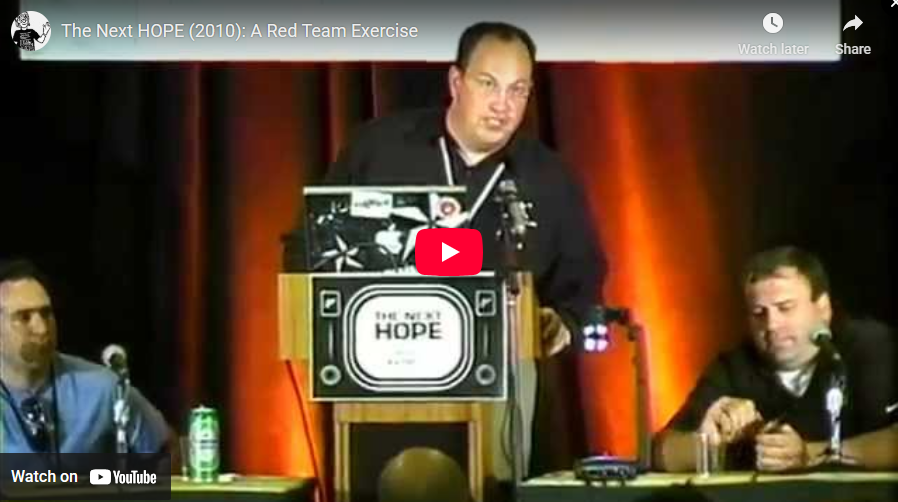
The Next HOPE (2010): A Red Team Exercise
Saturday, July 17, 2010: 3:00 pm (Lovelace): Shall we play a game? This talk will focus on full scope security assessments and stealing intellectual property in five easy steps. It will take the form of a game that divides the audience into attack and defend teams for a builder vs. breaker educational workshop. Included in the discussion will be physical, electronic (network, application, wireless, telecom, and cellular), and intelligence gathering techniques used for offensive projects.
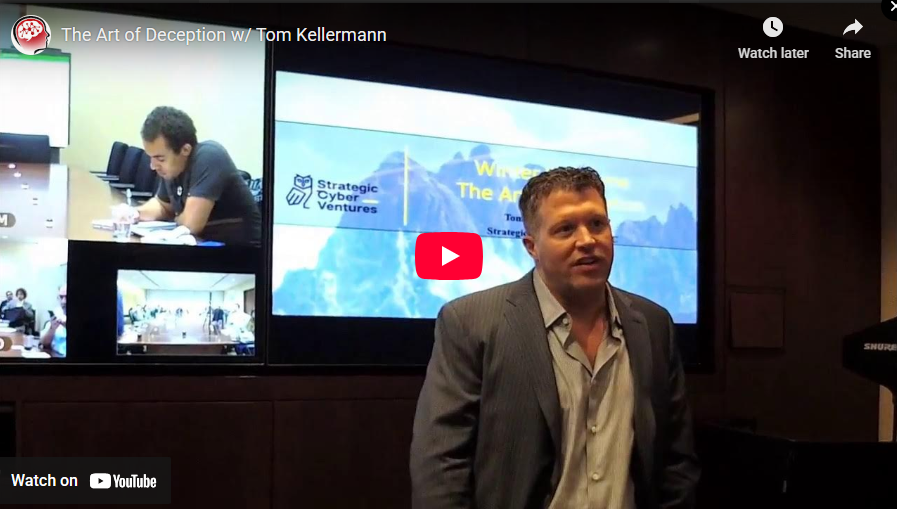
The Art of Deception w/ Tom Kellermann
Tom Kellermann will discuss how cybercriminals and nations states have modernized their cyber-attack “kill chains” against the financial sector. His presentation will highlight the elite hacker crews of Russia; China and Iran and provide a frank assessment on their modus operandi and predictions of attack vectors and criminal conspiracies to come. Tom will conclude his presentation by delineating a next-gen cybersecurity architecture which was purposely built to suppress cyber intrusions within the financial services
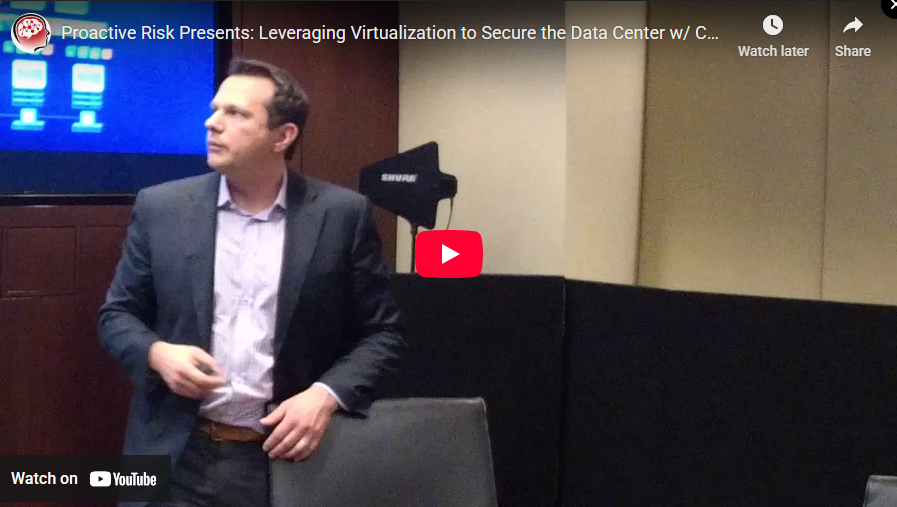
Proactive Risk Presents: Leveraging Virtualization to Secure the Data Center w/ Chris Corde
The biggest obstacle in security may well be an architectural gap between the apps and data we must protect, and the infrastructure in which we place controls. Virtualization presents an opportunity to architect in security rather than bolt in on. The question is no longer "How do I secure virtualized environments?" but rather "How can I leverage the unique properties of the virtualization to transform security?"
Proactive Risk Presents: ExactTrak w/ Simon Cuthbert
Take proactive action and bridge this gap. Apply our technology to laptops, external memory drives and a plethora of IoT devices. It works even when a device is turned off. Embedded and always live it gives you complete control. ExactTrak is the only solution in the world able to provide this level of protection for your data on the move. It’s also the only system that provides a verification report, evidencing you are compliant and did all you could to protect data you are accountable for, whilst it’s on the move.
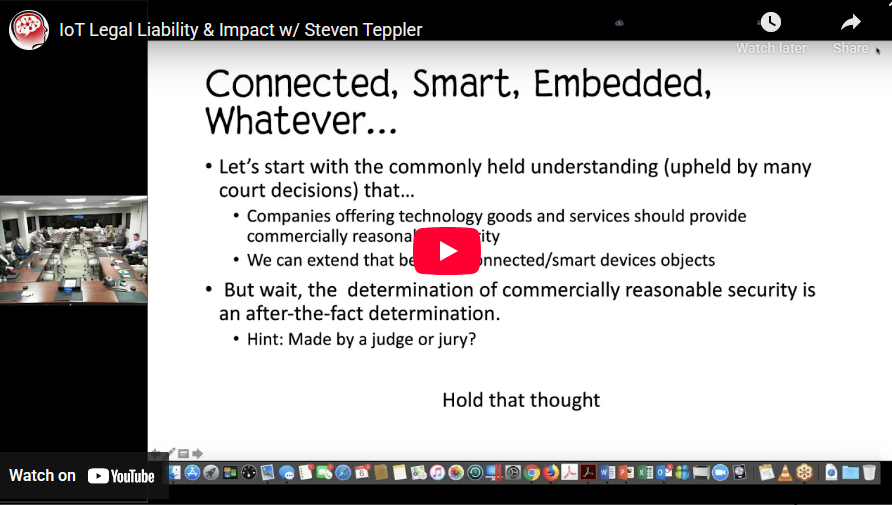
IoT Legal Liability & Impact w/ Steven Teppler
Steven W. Teppler is a Member of Mandelbaum Salsburg and Chairs the Firm’s Privacy and Cyber Security Practice Group. He has been involved in cybersecurity and electronic discovery matters since 2000. Steven’s background is diverse, and combines extensive technology and class action litigation and electronic discovery expertise. He holds six patents involving robust cryptographic methodology, led a tech startup providing content authentication technology, and has subject matter expertise on issues relating to cybersecurity, privacy, and blockchain technology that should be considered prior to launching a new electronic business.
APPSEC CA 2017 Tom Brennan
The APPSEC California 2017 interview with Tom Brennan highlights his longstanding involvement and leadership within the OWASP community. Brennan—an elected member of the OWASP Global Board of Directors—discusses his extensive history with the organization, beginning in 2004 where he contributed as a project leader and chapter leader. [archive.org]
The interview underscores Brennan’s broad expertise in cybersecurity. He is described as highly hands‑on, comfortable with tasks ranging from analyzing packet captures to conducting web application security testing.
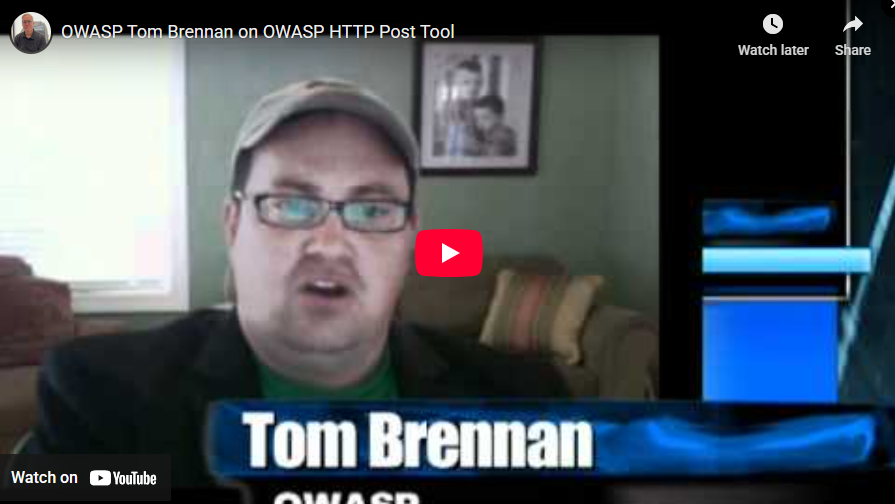
OWASP Tom Brennan on OWASP HTTP Post Tool
This section highlights insights from Tom Brennan of OWASP regarding the OWASP HTTP Post Tool, a utility designed to support security professionals in evaluating how applications handle slow or intentionally malformed HTTP POST requests. As outlined in the OWASP Testing Guide v3 (Section 4.9: Denial of Service Testing), this tool helps simulate conditions that could lead to application-layer DoS vulnerabilities—specifically those involving resource exhaustion caused by incomplete or throttled request bodies.
Tom Brennan’s work emphasizes the importance of proactively testing how web applications manage long-lived connections, slow data transfers, and edge-case POST behaviors. By leveraging the OWASP HTTP Post Tool, testers can identify weaknesses in request-handling logic, input processing, timeout configurations, and server‑side resource allocation. This approach aligns with OWASP’s broader guidance on ensuring systems remain resilient and available under both malicious and unexpected traffic conditions.